
Other than hiring movers, the perfect move is a U-Haul backed up right up to the front door. You can quickly load/unload everything, carrying weight a very short distance. Oh, and no stairs to deal with.
But what if you can’t get a U-Haul because parking space is tight and there’s construction going on? You’ll need to ferry stuff over several trips.
Now add carrying big and/or heavy stuff down a flight of narrow stairs without damaging the walls.
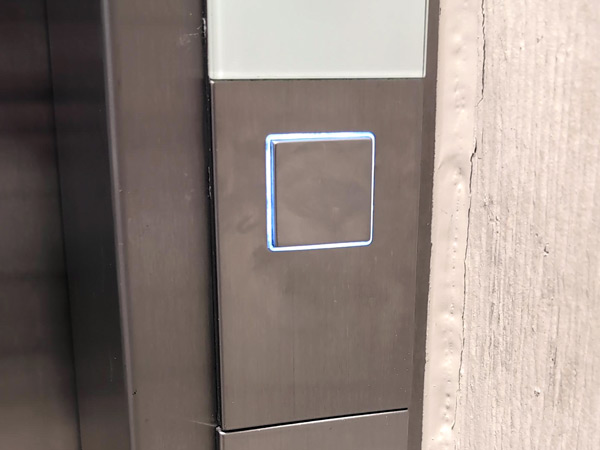
Plot twist: At the new place, the first floor elevator button isn’t working, so you have to walk up a flight of stairs with stuff (opening two doors), and take the elevator from the second floor.
And, ah yes, you’ve got a tweaked left bicep (or something) you haven’t gotten around to rehabbing, so that arm is half as useful.
These were the factors in my recent move. At first I saw it as a fitness challenge, but with the tweaked bicep, I was wondering if/how I’d be able to move everything. But on the bright side, I had a friend to help with the heavier/bulkier stuff and my training in the gym.
Training for Strength
The stronger you are, the more weight you can move even when you’re hurt. For example, if you can deadlift 335lbs and tweak your back, you might still be able to lift 215lbs. Relative to 335lbs, 215lbs is light, but what outside the gym will you need to lift that weighs hundreds of pounds? Not much.
But let’s say someone can deadlift 125lbs. Well, tweaking their back means they can’t lift a whole lot, and the real world stuff becomes harder.
In my case, being able to barbell curl 115lbs meant that even with a weakened arm, I was still able to carry enough weight to be useful during the move.
Training for Utility
Another advantage I had is that most of my training is with free weights and compound movements. There are many benefits to this, but one is that you can learn to carry stuff in different ways to emphasize different body parts.
Take a jump box. Now carry it in a way that emphasizes your biceps. Now in a way that’s harder on your grip. Now your shoulders. Your hips. Your skeletal structure. Rather than a machine targeting a body part for you, you can learn do that for yourself in 3D space with a destabilizing object.
Under normal circumstances, during the move I would’ve used my biceps more to get a good pump, but instead I shifted weight away from the bicep and onto other body parts as needed.
Tough Workouts
Many of my workouts involve five to six heavy compound lifts, plus accessories and a short run, over 2-3 hours. It’s a grind by the end, but it serves a purpose: To get the body used to taking a beating. Nothing outside the gym should be as hard as what I do in the gym.
I’m not recommending everyone do that, or that it be done all the time, but it’s certainly helpful when your body and mind are trained to keep pushing when they’re feeling beat up or tired.
My friend was sore after the first day, I was sore after the fourth, even though I was carrying the heavier/bigger stuff and did more rounds on my own.
Don’t ask for an easy life…
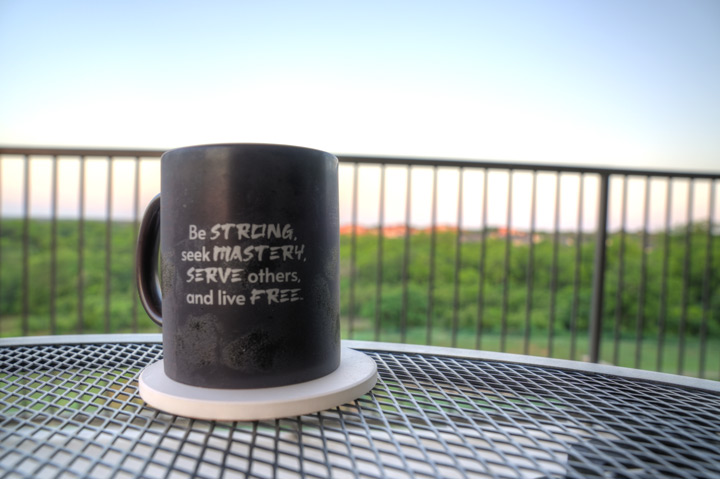
Like someone said, don’t ask for an easy life, ask for the strength to endure a difficult one.
It’s great when a situation is perfect and everything goes smoothly, and that’s what we should aim for. But often times, things don’t work out that way, and one’s training can make the difference between mission success and mission failure.
Takeaways
- If something is hurting, don’t keep adding more weight. Back off for a bit, assess what’s going on, and adjust so it doesn’t get worse and then you have to skip a bunch of lifts for several weeks and then worry about whether you’ll be able to move stuff. Don’t ask how I know.
- Train for strength. Even when hurt, it’s much likelier you’ll be able to take on real world situations.
- Training functional movements can help you learn how to adjust how you carry weight in case you’re hurt or tired.
- Every now and then, do longer, tougher workouts that challenge you physically and mentally. It makes the normal stuff feel easier, and when the going gets tough, you’ll know you can handle it.
- Make life easier by not asking for an easy life, but for the strength to endure a difficult one.